
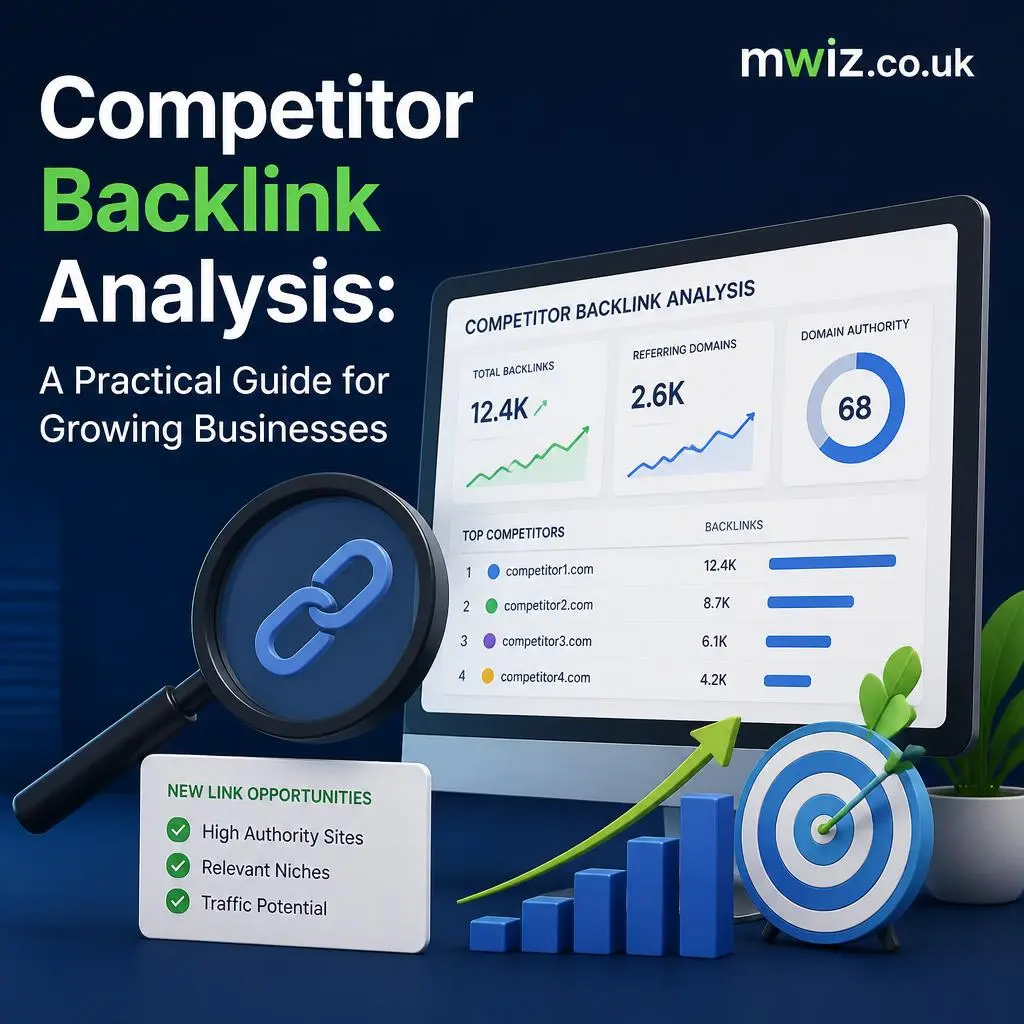
When a business is hard to find online, the problem may not be its product or website. Competitors could be earning recommendations from relevant publications, industry organisations and community sites that search engines interpret as signs of credibility. Competitor backlink analysis helps reveal where those recommendations come from and which opportunities might be worth pursuing. It is a way to make better decisions about visibility, not a shortcut to instant rankings.
What competitor links can tell you?
A backlink is a link from another website to yours. Search engines can use links as one signal among many when assessing pages, but a large total is not automatically a sign of strength. A handful of links from respected, relevant sources may be more useful than hundreds from unrelated sites.
Looking at competitors gives you a view of the wider conversation in your sector. A local clinic might find that health directories, community organisations and specialist publishers mention nearby providers. An independent film venue could discover that event listings, arts blogs and local media link to other cinemas. These patterns can suggest which sources matter to an audience, as well as where your own business is missing from the discussion.
The aim is not to copy every link. It is to understand why a source linked to a competitor, whether the same kind of coverage would suit your organisation, and what useful contribution you could offer.
How to make the analysis useful
Start by choosing a small group of genuine competitors. Include businesses that compete for the same customers or search results, rather than simply the largest names in the industry. Compare websites with similar locations, services or audiences; a national chain may have a very different link profile from a neighbourhood business.
Next, review the referring websites and the pages receiving links. A competitor’s homepage may have earned a mention because of its brand reputation, while a particular guide, research report or event page may have attracted links because it answered a specific need. That distinction helps you identify ideas you can act on, rather than treating every link as an interchangeable prize.
A structured competitor backlink analysis guide can help organise the process, from spotting gaps to assessing potential outreach sites. As you review the findings, ask practical questions:
- Is the linking site relevant to your field, location or audience?
- Does the link appear in useful editorial content, a directory, a resource page or another context?
- Would your business have something genuinely helpful to add to that page or publication?
- Does the destination page still work, and is the surrounding content current and credible?
Keep notes on the answers. A spreadsheet with the referring site, linked page, context, contact route and next step is often enough to turn a research exercise into a manageable plan.
Look beyond link counts
Backlink tools can provide estimates and highlight patterns, but they do not always show the full picture. Different platforms may discover different links, and a link that appears in a report may have little value in practice. Check important findings manually before investing time in outreach.
Also consider brand mentions that do not include a link. A publication may refer to your business, expert or event without linking to your site. That mention can still help people discover you, and it may offer a natural opening for a courteous request to add a relevant link. There is no guarantee the publisher will agree, so the request should be specific and useful to readers.
Content structure matters, too. If competitors earn links to clear, well-organised explainers, original data or practical resources, that may indicate an unmet need among readers. Creating a more useful page can be a stronger response than asking sites to link to a thin or outdated one. Clear headings, evidence and concise answers can also make information easier for readers and search systems to interpret, including systems that generate AI-assisted answers. No single page format guarantees inclusion or visibility.
Outreach without taking unnecessary risks
Once you have a shortlist, contact only sites where a relationship or editorial fit makes sense. Explain why the resource could help their audience, keep the message brief and avoid demands about exact anchor text or guaranteed placement. A personalised note is more credible than a template sent to hundreds of unrelated websites.
Some businesses consider outside help for researching and placing guest articles. A guest posting service may handle tasks such as publisher research, writing or coordination, but the quality and working model can vary. Before hiring, check how sites are selected, who controls the content, what happens if a placement fails, and whether the approach relies on real editorial standards. Osdire’s guide to guest posting services outlines the kinds of checks buyers can make. Whatever route you choose, keep responsibility for the strategy and review every proposed site yourself.
Be wary of promises of a fixed number of high-authority links in a short period. Paid or manipulative link schemes can create risk, and a polished report does not prove that a placement is relevant or worthwhile. Focus instead on useful coverage, trustworthy publishers and content that deserves attention.
Measure progress over time
Record the links and mentions you earn, but do not judge the work by link totals alone. Track whether target pages gain relevant referral visits, whether enquiries or bookings change, and how your visibility develops for topics that matter to the business. Search performance can shift for many reasons, so compare trends over a sensible period rather than attributing every rise or fall to one new link.
Done carefully, competitor backlink analysis is a research tool for finding gaps, understanding an industry’s information network and improving what your business contributes to it. The best opportunities are those that make sense for your audience even before any search benefit is considered.